Sleep Sack TOG Chart: What the Numbers Actually Mean
Last updated: November 11, 2026
This article contains affiliate links. If you buy through them, we may earn a commission at no extra cost to you. Full disclosure here.
You looked up TOG, found two charts that don’t agree, and closed the tab. That is the normal outcome, and it is not your fault.
TOG measures how much warmth a fabric holds. The hard part is that no authority publishes an official room-temperature chart, so every brand writes its own — and they overlap badly at the edges. Below are the published numbers side by side, where each one comes from, and a method that survives the disagreement.
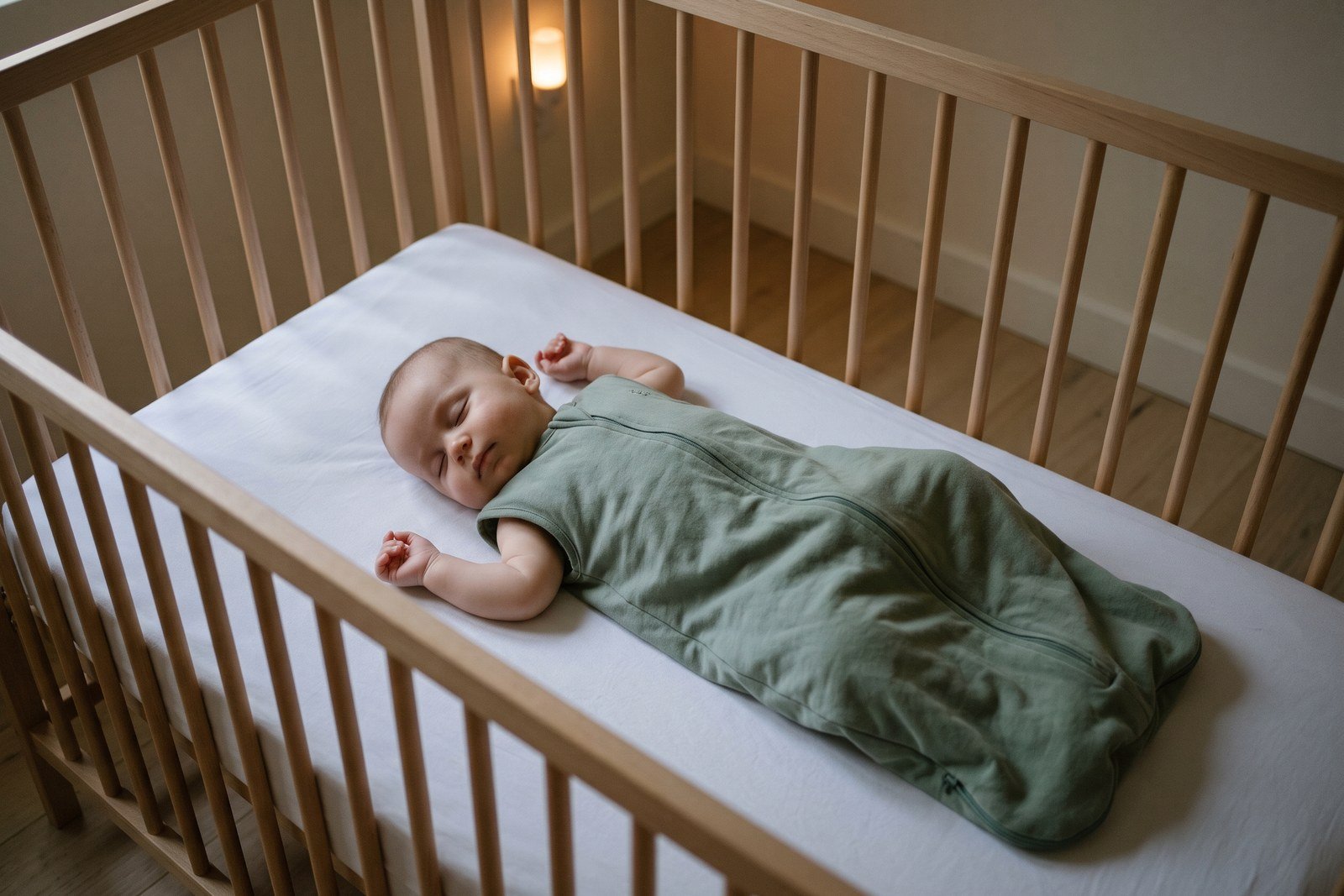
One rule first: the sack does not make sleep safe. A firm flat surface, a baby on their back, and nothing loose in the crib do. TOG only decides comfort.
The chart
| Room temperature while your baby sleeps | TOG | What goes underneath |
|---|---|---|
| 75–80 °F (24–27 °C) | 0.5 | Diaper and a short-sleeve bodysuit |
| 68–75 °F (20–24 °C) | 1.0 | Short sleeve, or long sleeve at the cooler end |
| 61–68 °F (16–20 °C) | 2.5 | Long-sleeve bodysuit, and a warmer one below 64 °F |
| 57–61 °F (14–16 °C) | 3.5 | Long sleeve plus a heavier base layer |
Those bands are one brand’s usage guidance, not a standard. That distinction is the whole article.
What TOG measures — and why no one publishes an official chart
TOG is thermal resistance: how much warmth a material holds in. The lower the number, the less insulation. “Thermal Overall Grade” is a backronym invented by retailers — the letters never stood for anything.
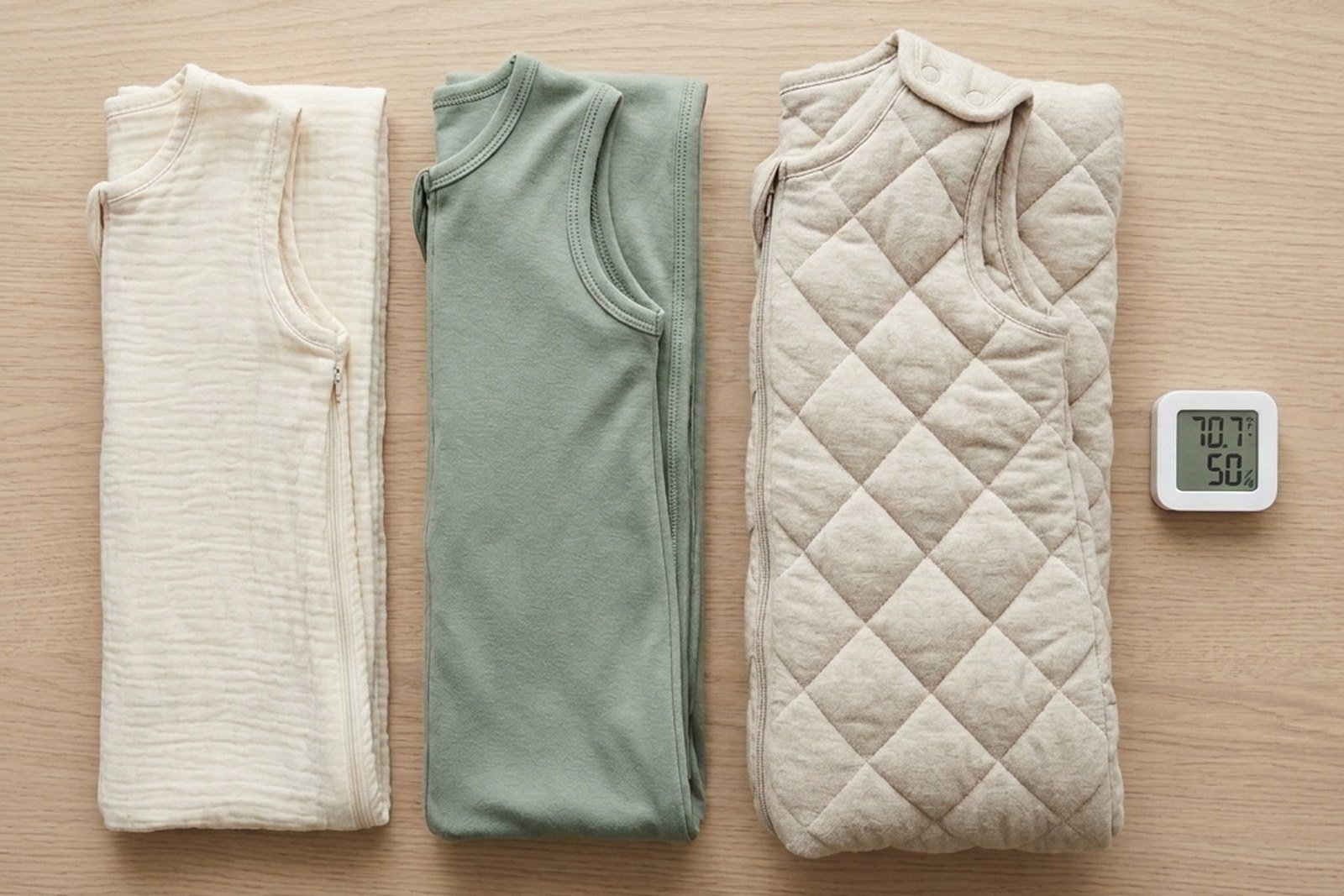
There is a real test behind the number: BS EN 17667:2022 defines how to measure the thermal resistance of filled textiles, and children’s sleep bags are in scope. There is even a standard, BS EN 16781, requiring the maker to advise the buyer on choosing an insulation value. What it does not do is say what that advice should be. The number is measured; the chart is written by the seller.
The Lullaby Trust, the UK safer-sleep charity, says plainly that it cannot publish a room-temperature-to-tog guide: insulation differs from product to product, heat trapped between layers changes the total, and every baby is different. Its advice is to follow the label of the sack you actually bought, keep the room at 16–20 °C (61–68 °F), and set heating no higher than 20 °C if it runs overnight. The NHS does publish bands — 2.5 tog for 16–20 °C, 1.0 for 20–24 °C, 0.5 for 24–27 °C — and brands publish their own, which do not match at the boundaries.
So: there is no official TOG chart. The table above is the manufacturer’s guidance for the sacks below, not a medical recommendation. Use the label on your own sack, keep a thermometer in the room, and treat your baby’s neck as the final answer.
The number nobody prints on the label
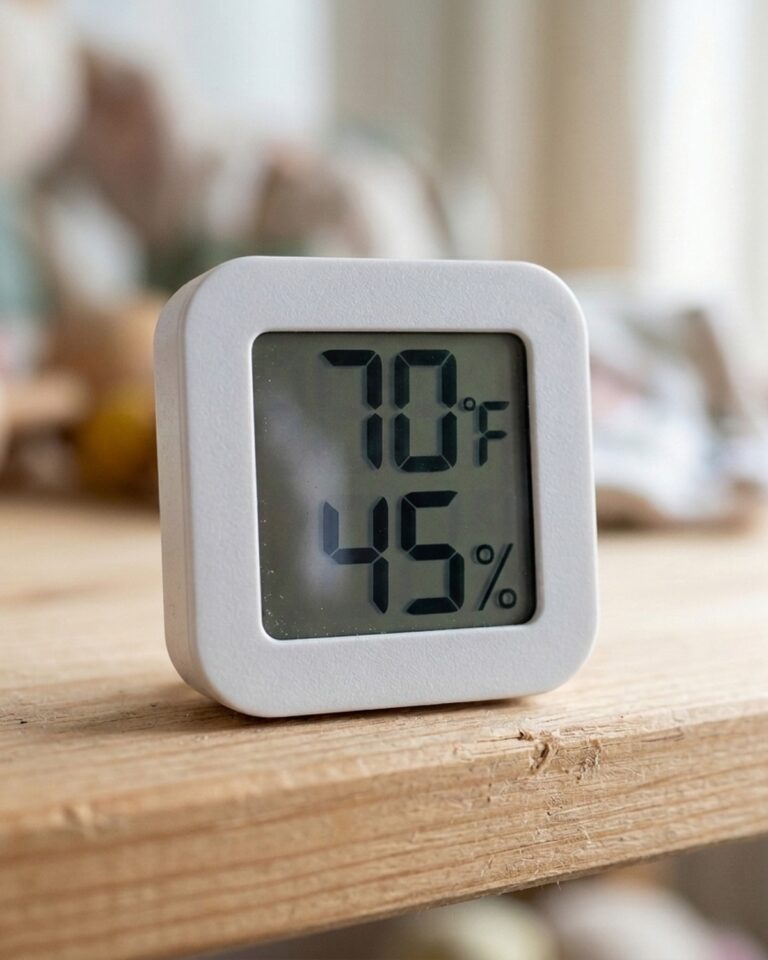
Before TOG, measure the room temperature — where your baby sleeps, during the hours they sleep.
Most nurseries lose a few degrees after midnight, reliably in older homes, rooms on an external wall, single glazing or any draft. That is why a $10 thermometer earns its place more than a second sleep sack: check it once at 2am and you will know whether 68 °F at bedtime is 64 °F at three in the morning.
How to check the baby, not the chart
Feel the back of the neck or the chest. Not the hands, not the feet — a baby’s circulation sends heat to the core first, so cool fingers are normal and tell you nothing.
- Too warm: damp or sweaty neck, damp hair, flushed cheeks, heat rash, rapid breathing, a baby who keeps waking and fussing.
- Too cold: a cool chest and more frequent waking. Add a base layer before you add a heavier sack.
Overheating is the direction that matters more. It is associated with a higher risk of sleep-related death, which is why the guidance is to dress for the room and never to add a hat indoors. If you are unsure right now whether your baby is cold — the neck test, the room numbers and the layering by age — that whole check is here.
Fit is where the real risk is
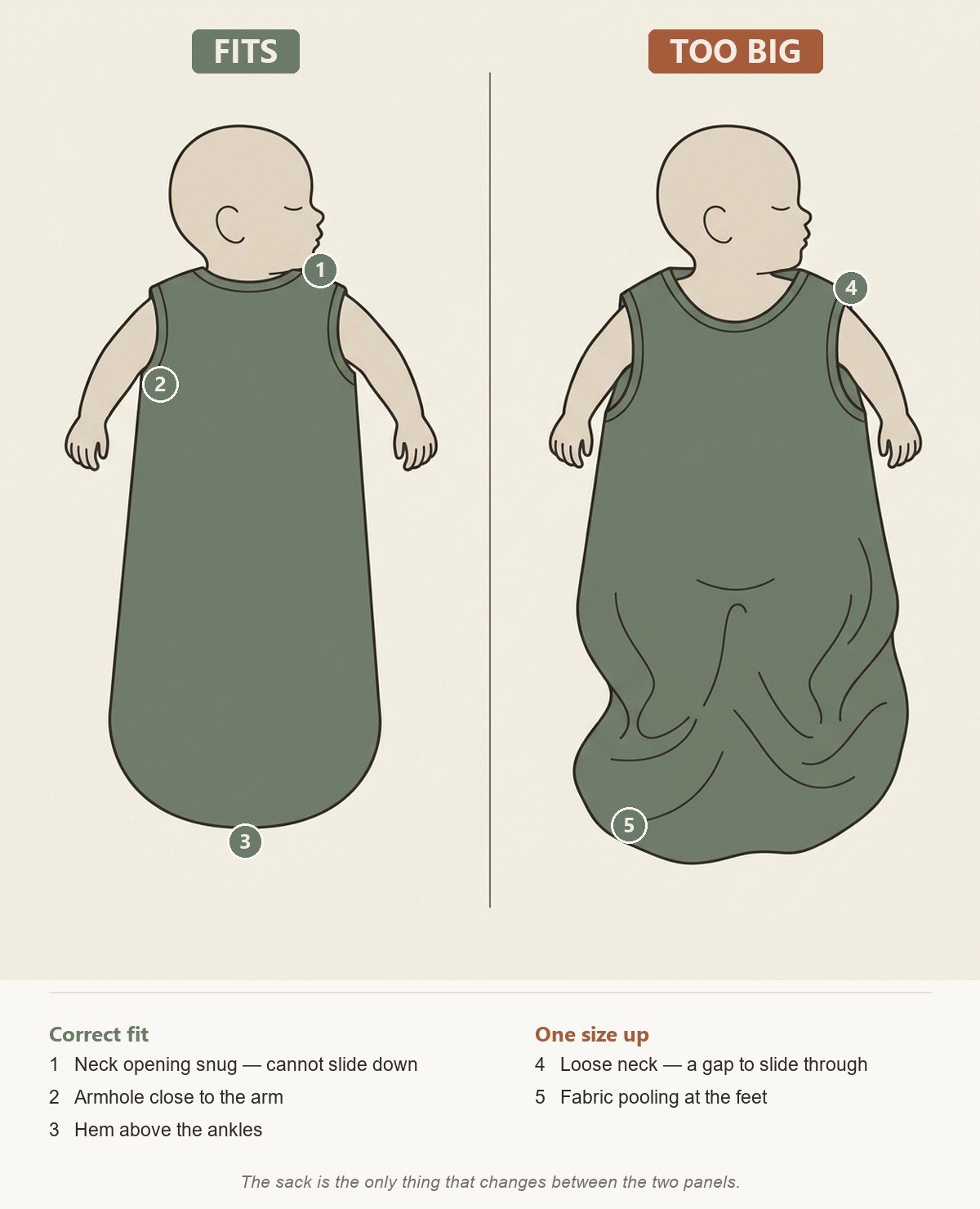
TOG gets all the attention, but fit is the part that can actually hurt a baby. Three checks, in order:
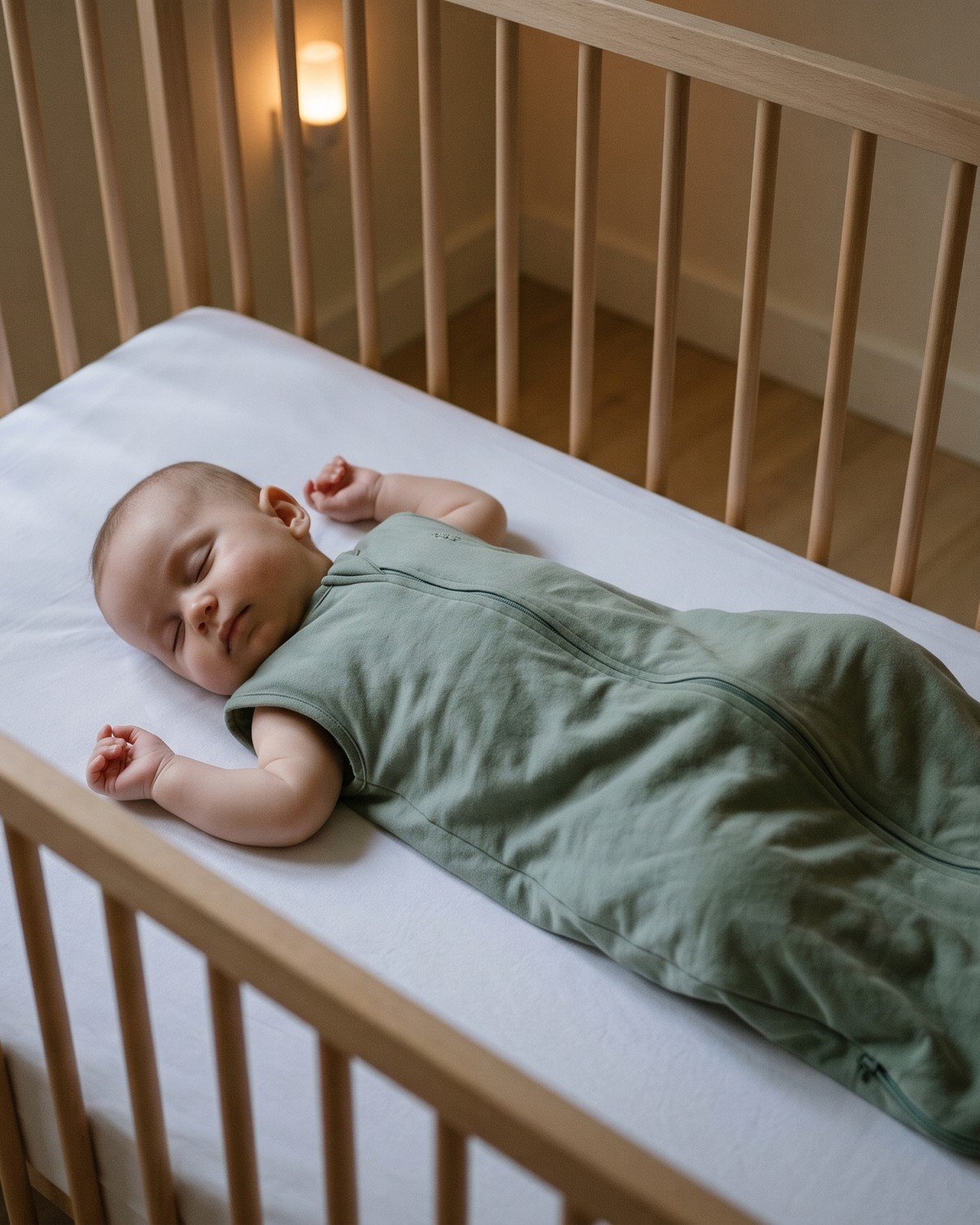
- Neck and armholes. Snug enough that your baby cannot slide down inside the sack and that no fabric can come up over the face.
- Size minimums. Follow the weight and length on the label. A sack bought “to grow into” is a hazard, not a saving.
- Nothing else in the crib. No blanket over the sack, no quilt, no pillow, no bumper. The sack replaces loose bedding; it does not license extra bedding.
One category to skip entirely: weighted sleep sacks. The Consumer Product Safety Commission has called weighted infant swaddles and blankets unsafe for sleep. A weighted product is not a warmer sack.
When to move from swaddle to sleep sack
The American Academy of Pediatrics says to stop swaddling at the first sign of trying to roll over — around three to four months for most babies. From that point the arms come out and a sack takes over. There is no evidence swaddling lowers the risk of SIDS, so you give nothing up by stopping, and infant sleep clothing studies have found sleep sacks as safe as, if not safer than, other bedding.
The sleeping sacks worth buying
If you want one line of advice: buy the 1.0 TOG sack and change what is underneath. Most heated and air-conditioned American nurseries sit between 68 and 75 °F, and two sacks — one 1.0, one 2.5 — cover the year in most houses.
The picks are from Kaiya Baby: 100% GOTS-certified organic cotton on the outside, camel wool and SORONA® filling. The details that help at 4am are the temperature-sensing sticker on the chest, which lets you check warmth without unzipping anything, and the J-shaped zipper, which opens from the bottom for diaper changes.
| Pick | Price | Choose it if |
|---|---|---|
| 0.5 TOG sleeveless sleep sack | $45 | Your nursery stays above 75 °F, or it is summer and the AC is doing its job. Single layer, no filling, sleeveless. |
| 1.0 TOG long-sleeve sleep sack | $63 | You want one sack for most of the year. 68–75 °F. This is the one to buy first. |
| 2.5 TOG long-sleeve sleep sack | $69 | Your nursery drops below 68 °F at night, or you live somewhere with a real winter. |
| 1.0 TOG walker (with feet) | $73 | Your child is standing and walking. The open feet stop the sack from becoming a trip hazard. |
Prices are today’s sale prices and change; the retailer sets them. Sizes run from 0–6 months to 3–4 years depending on the style, and the walker version is the one that survives a toddler.
The one-page version
- Put a thermometer in the nursery and check it at 2am.
- Match the room to the label on your sack, not to another brand’s chart.
- Feel the back of the neck, not the hands.
- Check that the neck opening is snug and your baby cannot slide down inside the sack.
- Nothing else in the crib — no blanket over the sack, no pillow, no bumper, nothing weighted.
- Stop swaddling at the first sign of rolling. Buying only one sack? Buy the 1.0 TOG version.
Everything else about the first year of nights is in the baby sleep schedule by month. If you are still deciding what your baby sleeps in, crib vs. bassinet covers the first six months, and how to choose a crib mattress covers the surface underneath.
Questions we get about TOG
What TOG should a baby wear at 68 °F?
1.0 TOG sits at the top of its band at 68 °F, so start there with a short-sleeve bodysuit. If your room drops into the low 60s overnight, the 2.5 is the better match — and a thermometer will tell you which of the two you actually have.
Can a baby wear a sleep sack over a swaddle?
No. They are alternatives, not layers. Once a baby shows signs of rolling, the swaddle comes off and the sack goes on.
How many sleep sacks do I need?
Two, in the same rating. One is in the wash at some point every week, and a spare is cheaper than a 2am improvisation.
Does a higher TOG mean safer?
No. TOG only describes warmth. Safety comes from the surface, the position and the absence of loose bedding.
My baby is always sweaty at the neck. Should I buy a lower TOG?
Check the base layer first — that is the cheaper change — then the room temperature, and only then the sack.
Specifications and prices are set by the retailer. Confirm the TOG rating and the size minimums on the product page before you buy.