Is Your Child Cold? Check the Neck, Not the Hands
Last updated: November 10, 2026
This article contains affiliate links. If you buy through them, we may earn a commission at no extra cost to you. Full disclosure here.
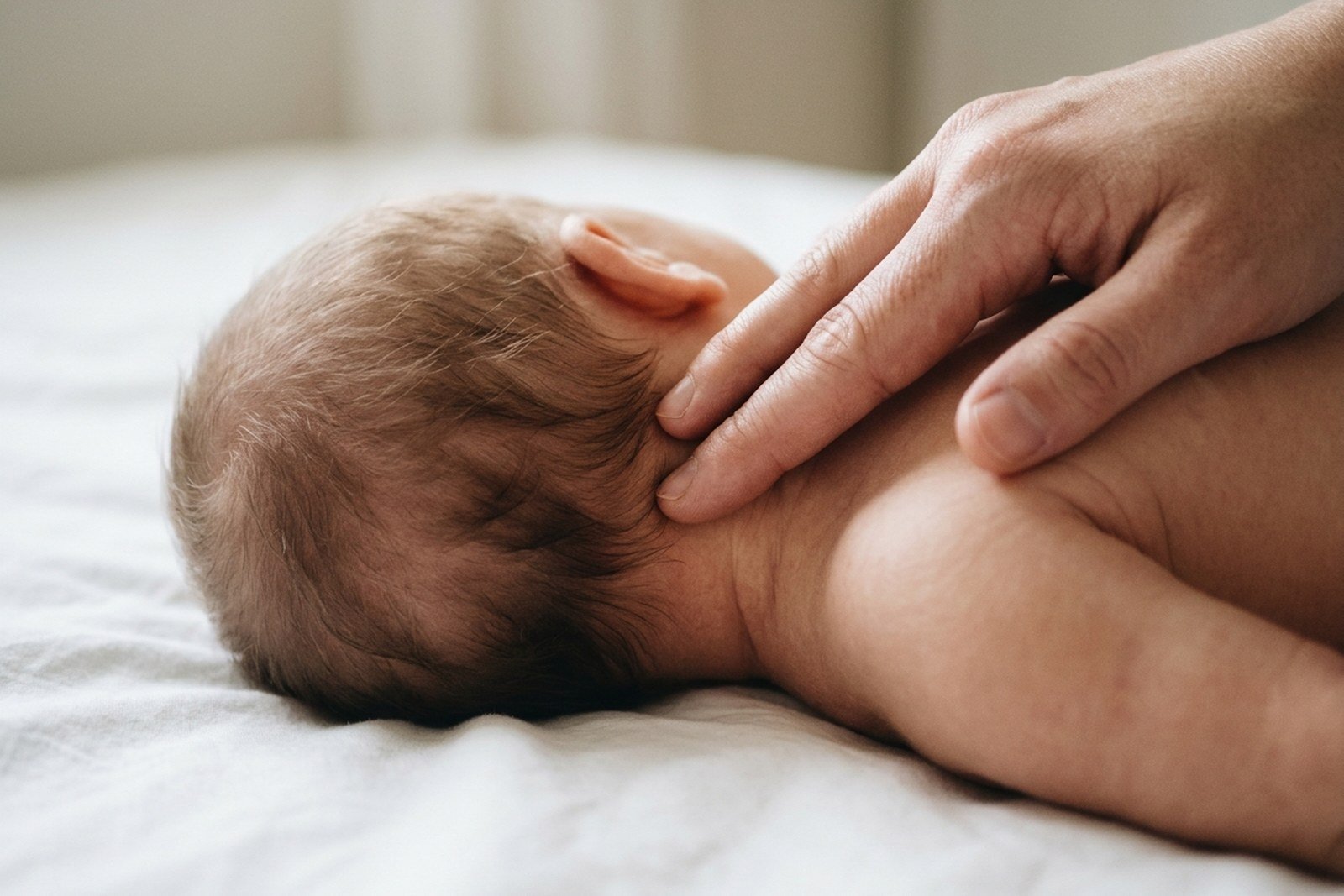
Almost every parent checks the wrong thing. You touch the baby’s hands, they feel cool, and you add a layer. Ten minutes later the back of the neck is damp and the baby is fussy, because the hands were never the problem.
Here is the whole subject in one sentence: a baby’s circulation sends heat to the core first, so the hands and feet run cool by design, and the only reliable place to feel is the back of the neck or the chest. Everything else in this article — the room numbers, the air conditioning, the humidity, what to put on — follows from that.
And one thing worth saying before any of it: in a healthy baby, the risk that matters is overheating, not cold. Overheating is associated with a higher risk of sleep-related death, which is why every recommendation below leans toward the cooler side.
The 10-second check
Put two fingers flat against the back of the neck, under the hairline. Then the chest. That is the reading that counts.
| What you feel | What it means | What to do |
|---|---|---|
| Warm and dry | Right where you want to be | Nothing |
| Damp or sweaty neck | Too warm — the direction that carries risk | Remove a layer |
| Flushed cheeks, damp hair, rapid breathing | Clearly overheated | Layers off, cool the room. Call the doctor under three months |
| Cool chest, waking more often | Too cold | Add a base layer first |
| Cool hands, warm neck | Normal | Nothing |
The room: what the numbers actually are
Two authoritative sources, two bands, and a small honest gap between them:
- 68–72 °F (20–22 °C) — the range the Sleep Foundation reports as the general expert recommendation for a baby’s room.
- 61–68 °F (16–20 °C) — the range the UK’s Lullaby Trust gives, with the plain warning that babies are safer a little on the cool side than too warm.
They overlap at the edges and they are not describing different babies so much as different climates, different housing and different clothing conventions. What both agree on: measure the room, not your instinct.
One practical shortcut, from Canada’s public health agency: if the room temperature is comfortable for you, it is comfortable for your baby — dressed for it. That is a starting point, not a rule, because an adult in a sweater is not the same as an infant in a 2.5 TOG sack.
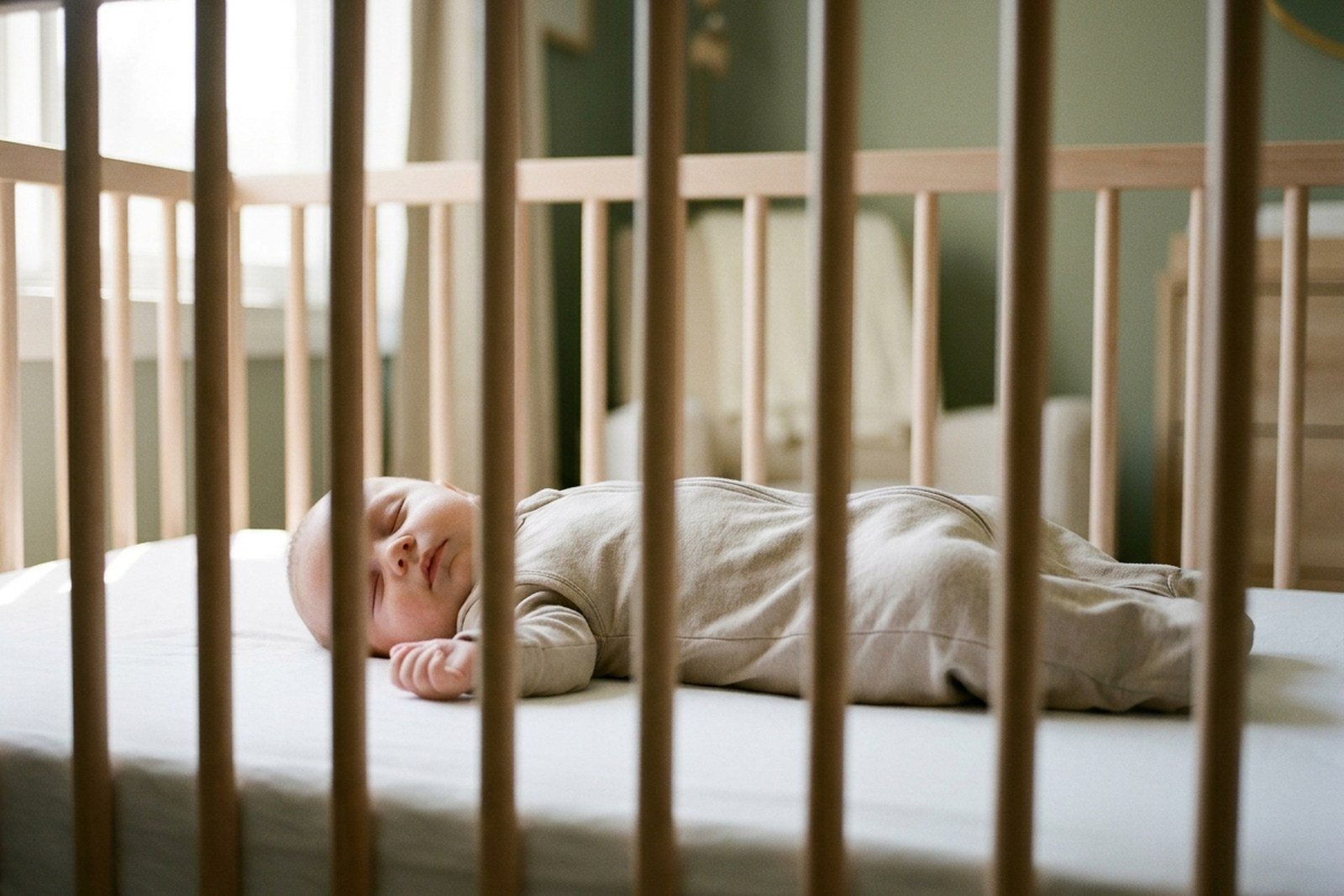
Two absolute rules sit on top of the numbers. No hat indoors — a baby loses heat through the head, so covering it is a heat trap. And nothing loose in the crib for the first year: no blanket, no quilt, no pillow, no bumper. That is not a preference.
Air conditioning: why 68 °F does not feel like 68 °F
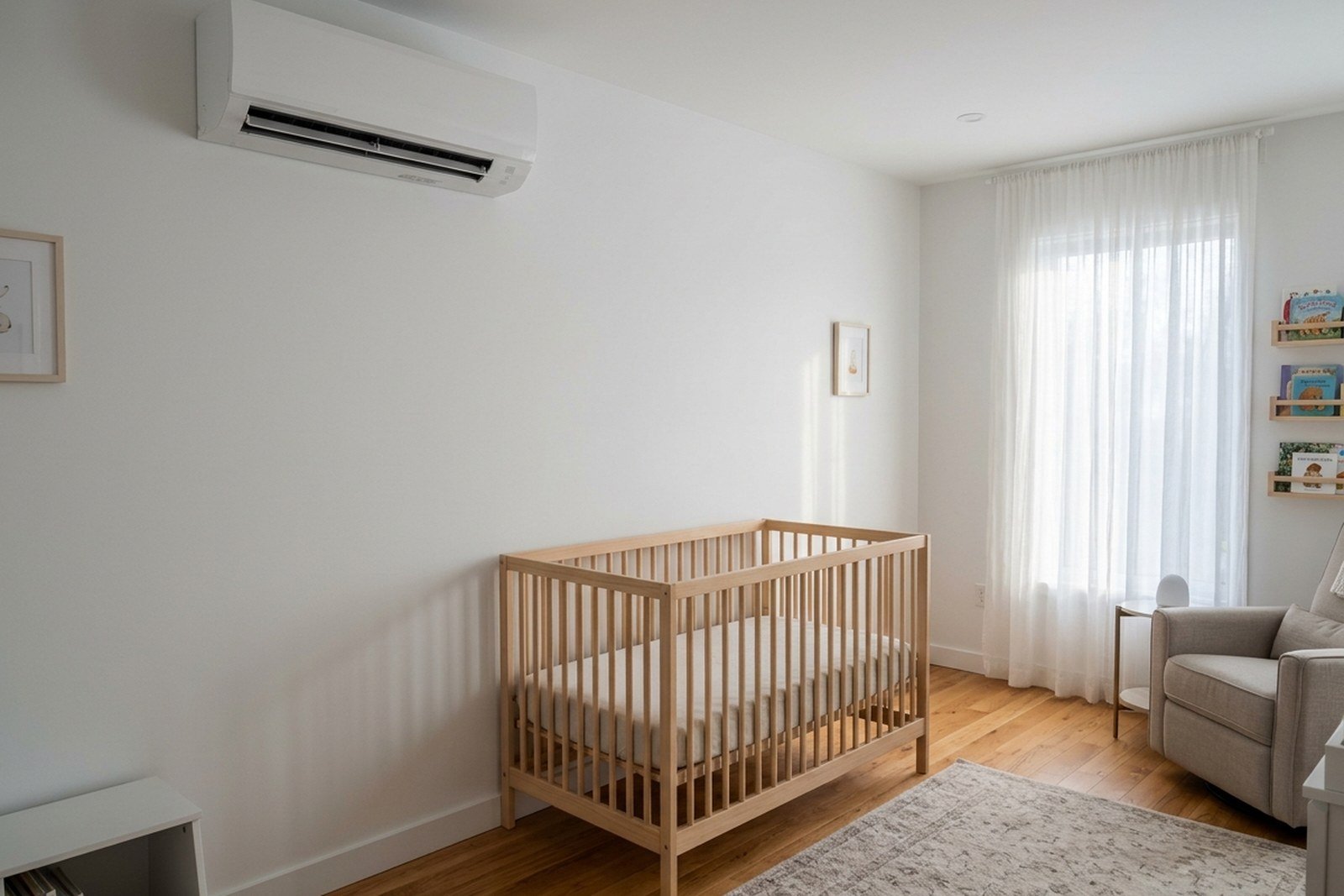
A room held at 68 °F by air conditioning feels drier and cooler against the skin than a room sitting at 68 °F with the heating on. Air movement strips heat from skin, and cool air holds less moisture. So a baby in light clothing in an air-conditioned room can be genuinely cool at a number that would be fine in winter.
What to do about it, in order of impact:
- Do not aim the airflow at the crib. A vent or a unit pointed at the sleep space creates a local draft that no thermometer on the wall will register. Deflect the louver, or move the crib.
- Set the thermostat and leave it. A room that swings five degrees overnight is harder to dress for than a stable one. If your unit has a night mode or eco mode, check what it actually does to the temperature before you trust it.
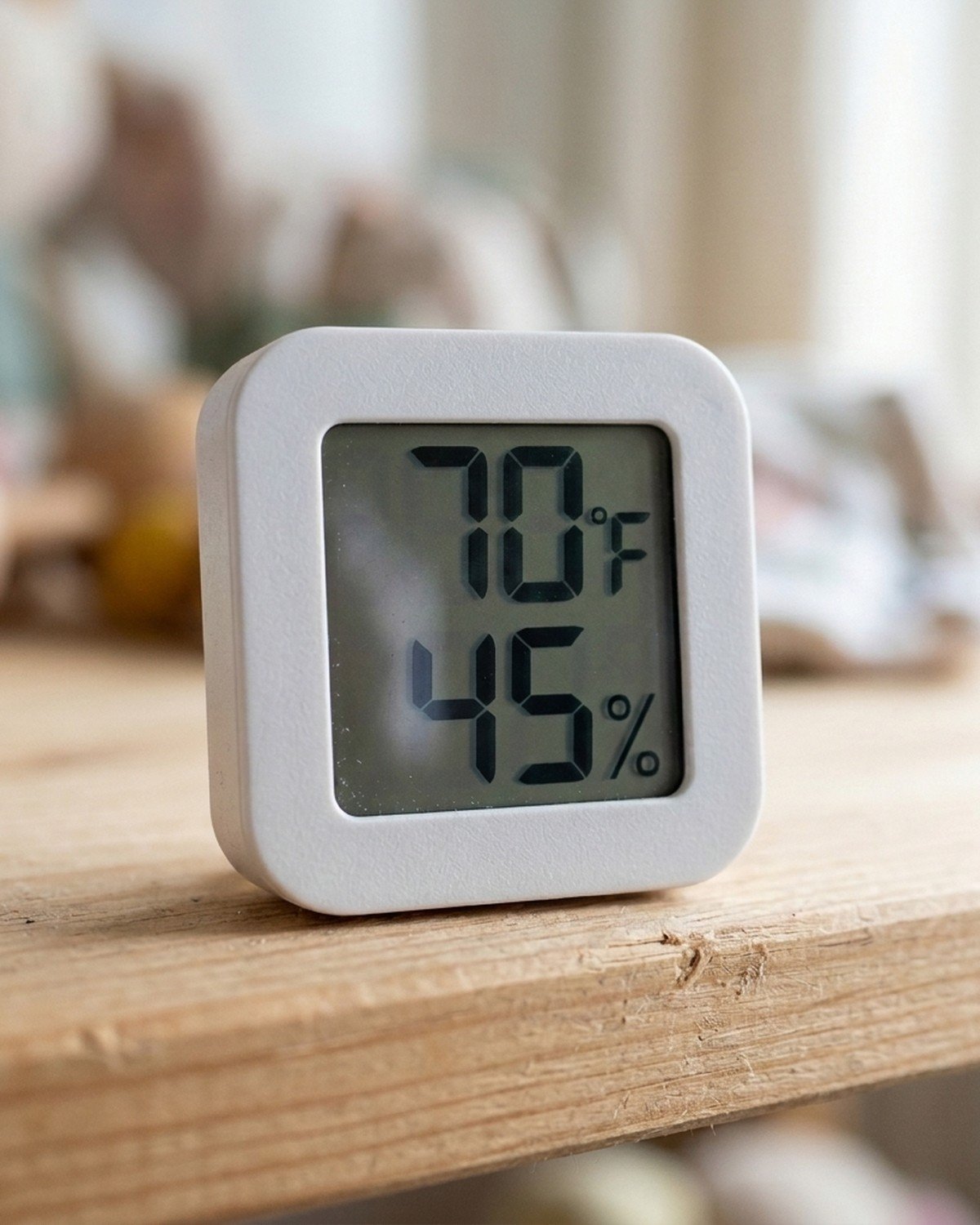
- Watch the humidity, not just the temperature. Air conditioning removes moisture. A room that reads a comfortable 70 °F at 30% humidity is a room where a baby can wake with a dry nose and a scratchy cough.
- Keep the filter clean. A clogged filter drops airflow, and a unit that cannot move air runs longer and cools unevenly.
If you are in air conditioning and your baby reads cool at the neck, dress one step warmer than the chart suggests before you turn the thermostat up. It is cheaper and it is more stable.
Humidity: the number nobody measures
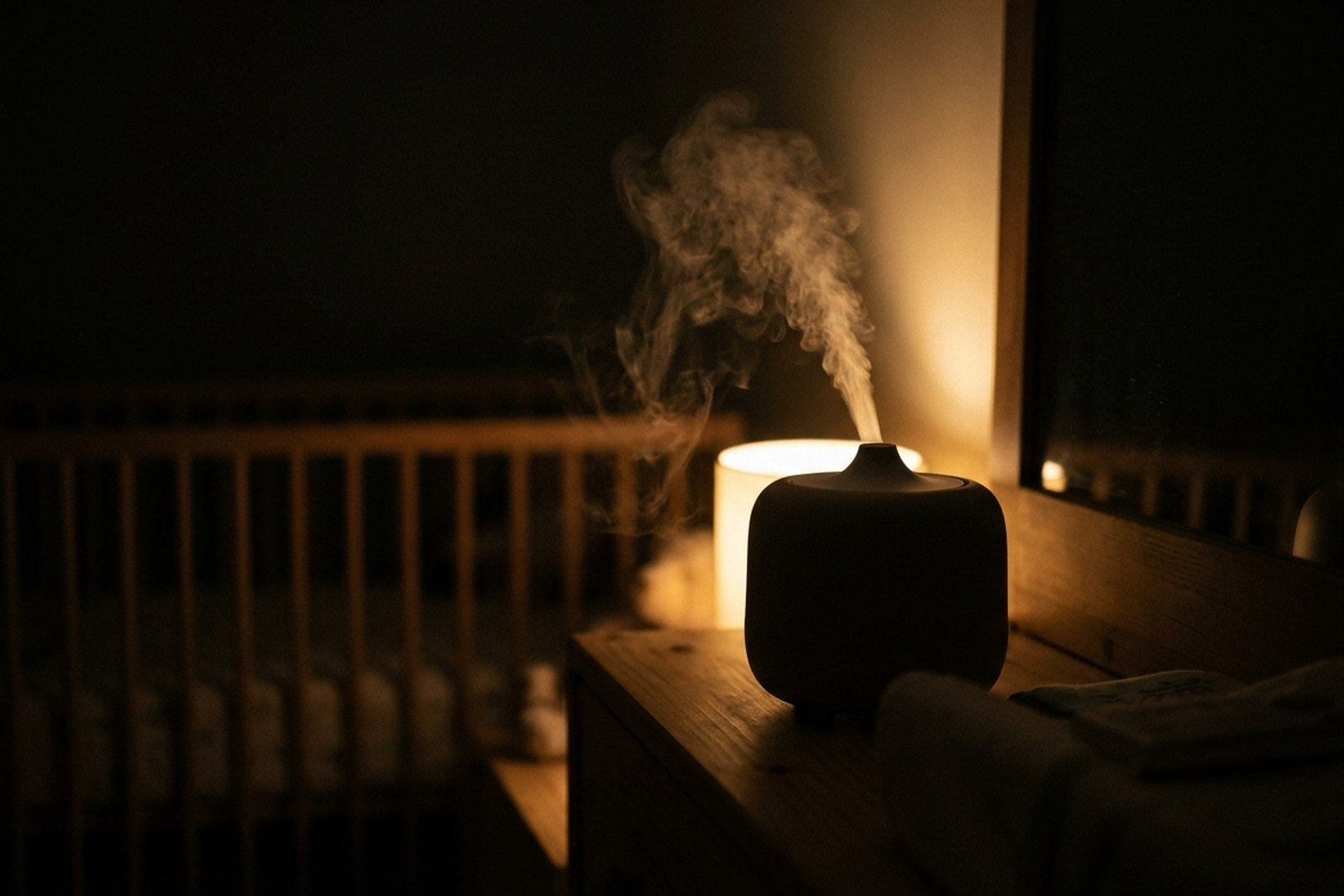
The US Environmental Protection Agency’s guidance for indoor air is to keep relative humidity below 60%, and ideally between 30% and 50%. Above that, you are feeding mold and dust mites. Below it, the air dries out the nose and throat.
What each direction looks like in a nursery:
- Too dry (under 30%): dry nose, dry lips, a cough that is worse at night, static, cracked wood on furniture, and a baby who wakes more. Heating and air conditioning both do this.
- Too damp (over 60%): condensation on windows in the morning, a musty smell, damp patches near the ceiling, and dust mites thriving. In a nursery, high humidity is a bigger problem than low humidity.
A cheap thermo-hygrometer on the dresser tells you both numbers at once, and it is the single most useful purchase in this article. If you use a humidifier, three rules matter more than the model: cool mist (no steam burns near a crib), waterless auto-off, and a tank that gets emptied and rinsed every day. One that already meets the first two is the Safety 1st Smart Humidifier at ANB Baby ($99.99, cool mist with smart humidity control). The third rule is still yours — no humidifier cleans its own tank. A humidifier left full and running in a warm room is a bacteria culture with a mist nozzle. No additives, no essential oils, no Vicks in the water — none of that is approved for an infant’s room.
If the room is cold
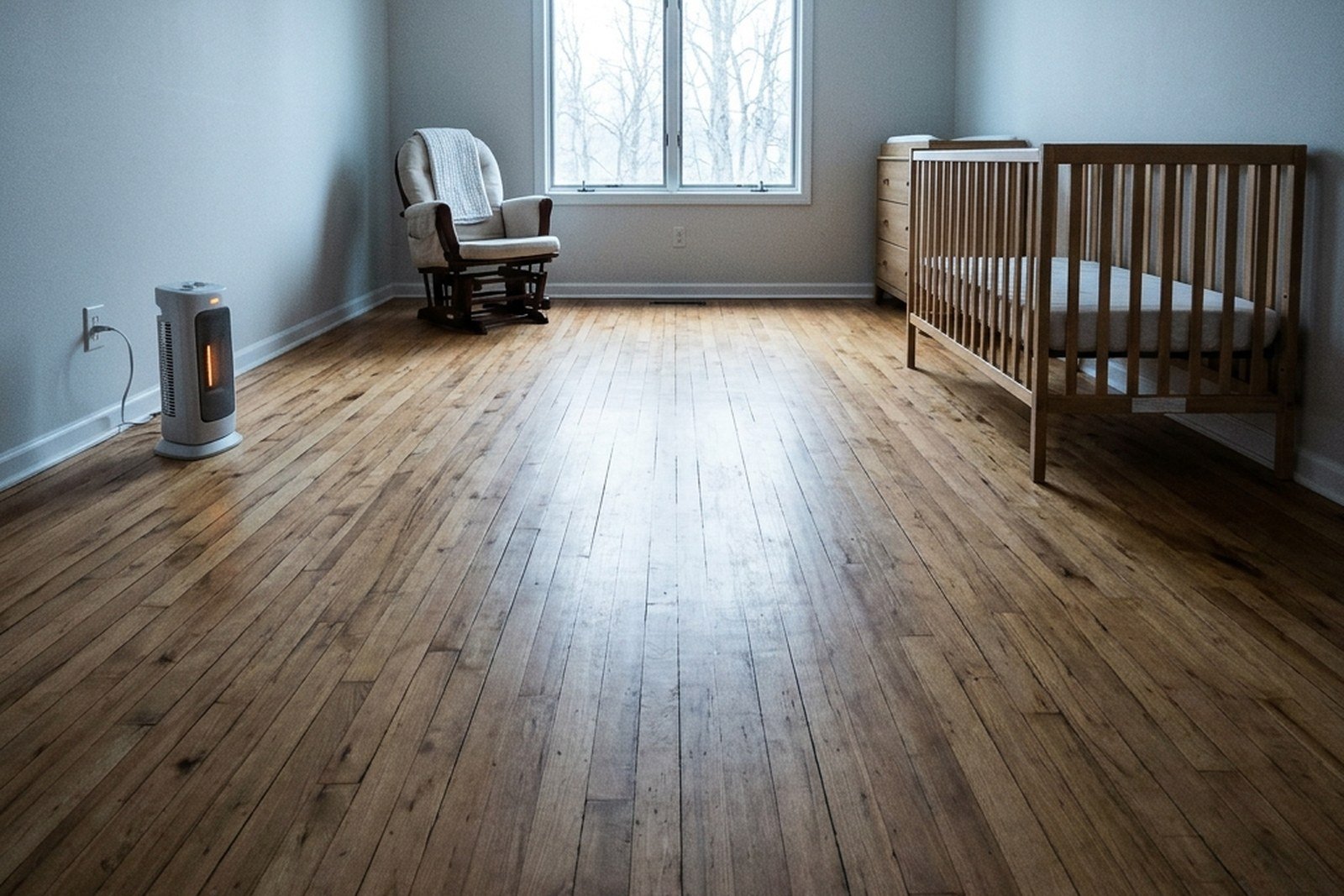
Space heaters are the part of this subject where the safety data is blunt. The US Consumer Product Safety Commission estimates that portable heaters, including electric space heaters, are involved in an average of 1,600 fires a year, with 70 deaths and 150 injuries (2020–2022). Their guidance is specific:
- Keep the heater at least three feet from drapes, furniture, bedding and anything else that burns.
- Plug it directly into a wall outlet — never an extension cord or a power strip.
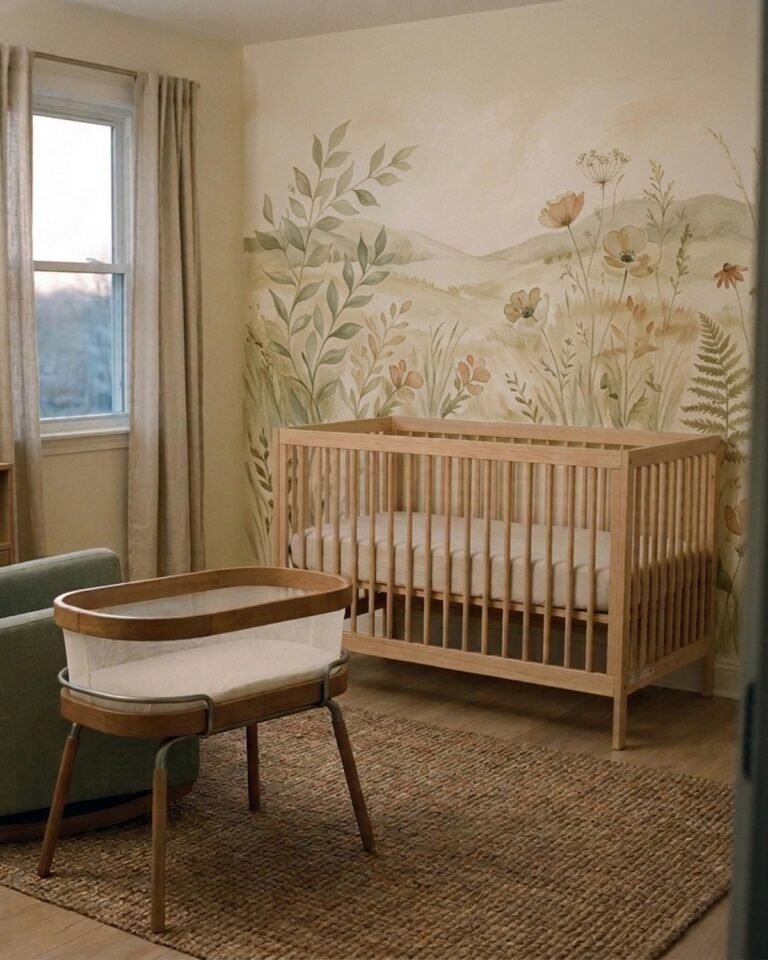
- Keep the crib, the cot and the Moses basket away from radiators and electric heaters.
- Working smoke alarm on every level, CO alarm outside sleeping areas.
Turn it off when you sleep. That line is in the CPSC’s own list of heater rules, and it is why a space heater is not an overnight solution for a nursery — no thermostat setting makes it one.
So what do you do in a genuinely cold room? Heat the room before bedtime and let the bedding do the work overnight: a higher TOG sleep sack, a warmer base layer, and the crib away from the outside wall and the window. The Lullaby Trust is explicit about the mechanic — if the baby is in a sleeping bag, do not add a blanket on top; add a layer of clothing or move to a higher TOG. And remember that one blanket folded double counts as two blankets, which is one of the easiest ways to overheat a baby by accident.
Hot water bottles, electric blankets and weighted blankets are not options for a baby’s sleep space. Not with supervision, not for a nap.
What to put on, by age
Under 12 months
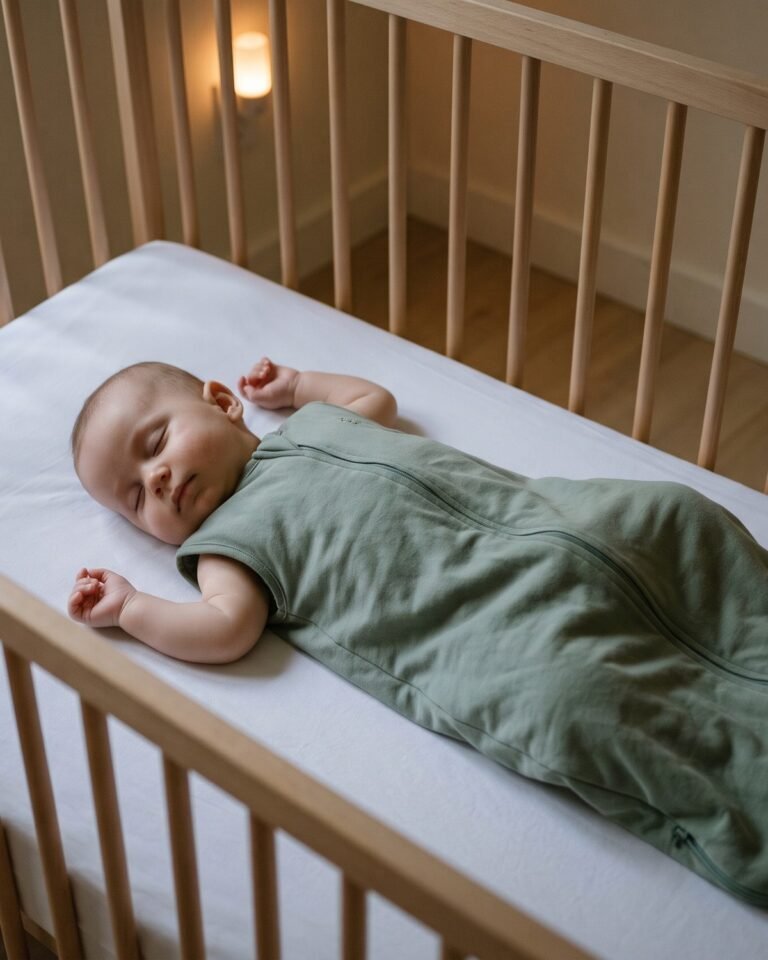
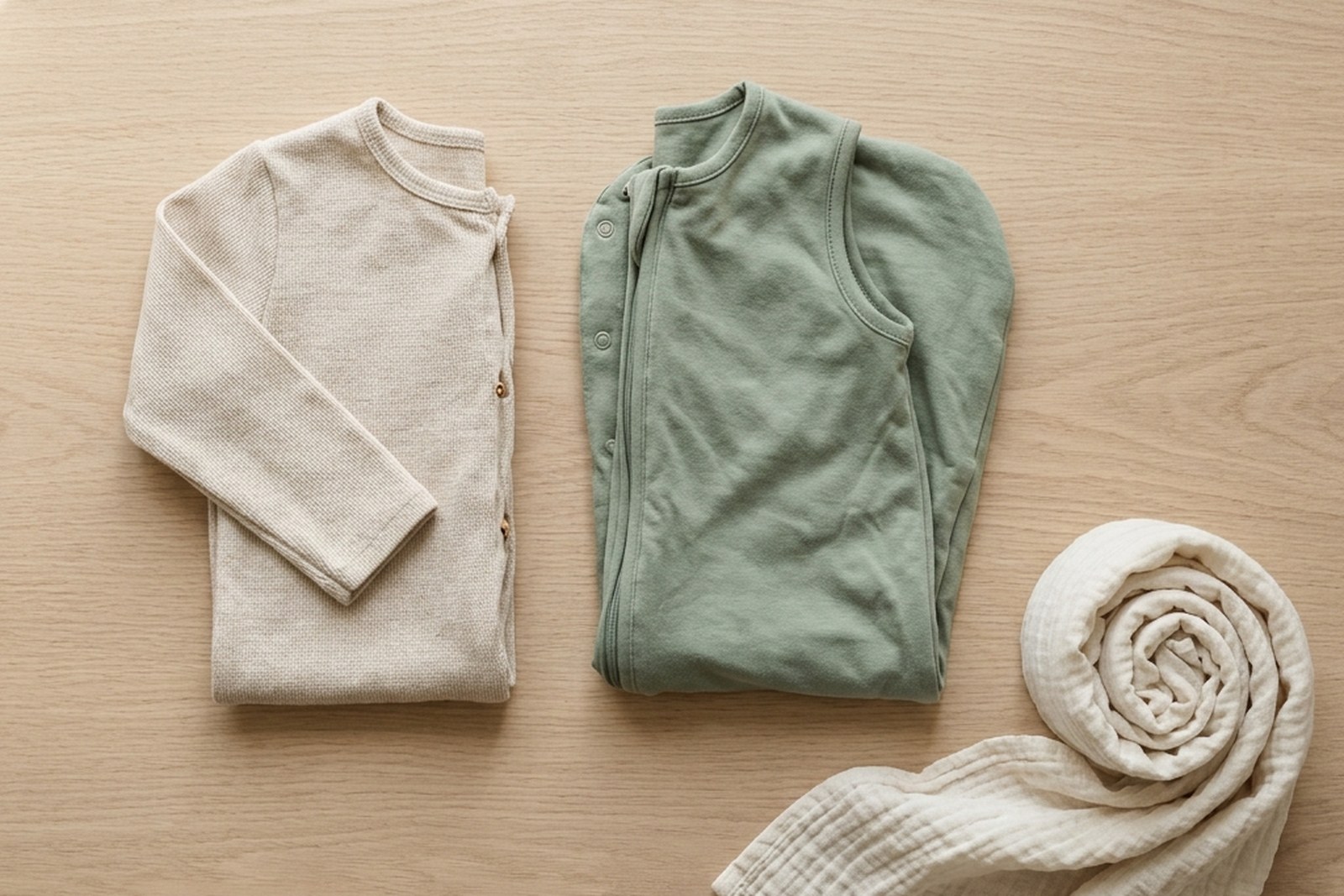
a fitted sheet and nothing else in the crib. Warmth comes from a sleep sack, fitted at the neck and armholes, matched to the room by TOG — 0.5 for warm rooms (75–80 °F), 1.0 for most heated and air-conditioned homes (68–75 °F), 2.5 for cool rooms (61–68 °F). Underneath, a bodysuit or pajamas, not both plus a vest.
From 12 months
a blanket becomes an option, once your child can move it off their face. Most families start with a light muslin or a thin wool blanket, tucked at the foot end, and add a proper duvet only much later. Nothing forces a move out of the crib at twelve months, either — a toddler can keep sleeping in the crib with a light blanket, and that is often safer than a bed they can climb out of in the dark.
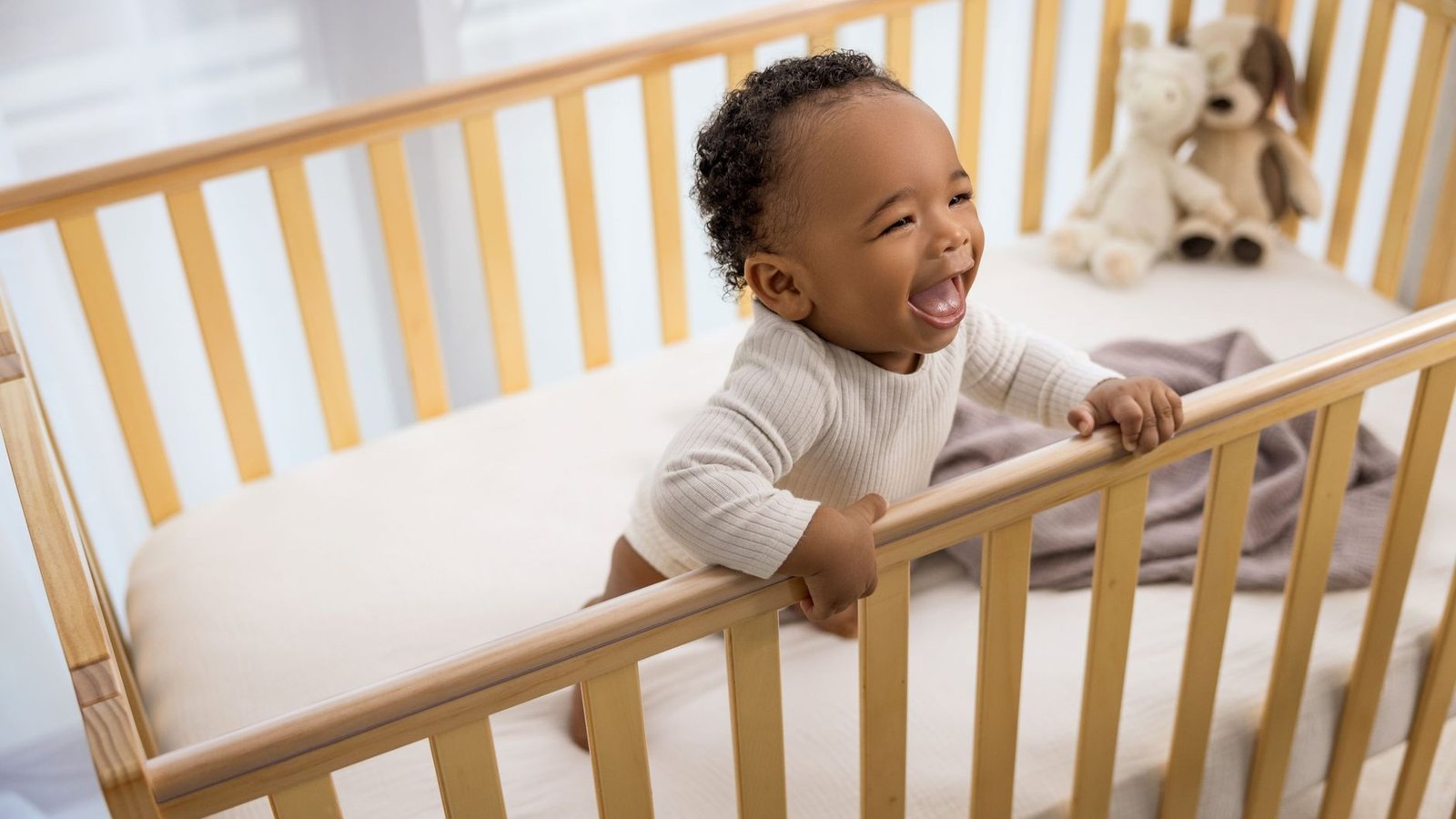
The rule everyone quotes — “one more layer than you are wearing” — is a decent starting point and a bad rule in two situations: when you are moving around and your baby is lying still, and when the room has air conditioning. In both cases, check the neck.
Feet to foot: put the baby’s feet at the bottom of the crib so they cannot wriggle down under the bedding and get their head covered. This single habit does more for safe sleep than any product in this article.
The products that actually do something
There are only three jobs here: keep the core at the right temperature overnight, give the skin something breathable next to it, and measure the room. Everything else is decoration.
| Item | Price | Choose it if |
|---|---|---|
| 1.0 TOG long-sleeve sleep sack — GOTS organic cotton shell, camel wool and SORONA fill | $63 | Your nursery sits between 68 and 75 °F. This is the one sack that covers most American homes. |
| 2.5 TOG long-sleeve sleep sack — same construction, heavier fill | $69 | Your room drops below 68 °F overnight, or you live somewhere with a real winter. |
| Long bamboo pajamas | $39 | You want a base layer that is breathable under a sack and does not trap heat at the back of the neck. |
| Muslin baby quilt — eight layers, printed | $67 | Your child is over 12 months and you want a first blanket that is light, breathable and washable. |
| Plant-dyed merino baby blanket — HSA/FSA eligible | $170 | You want one blanket that regulates temperature instead of trapping it, and you are past the first birthday. |
What we would skip. A second blanket “for layering” — one is enough, and two is how babies overheat. A quilted or fleece sleepsuit bought to avoid turning up the thermostat. A space heater sold as a sleep product: the safety guidance says turn it off when you sleep. Hot water bottles and electric blankets. And any humidifier you do not intend to clean daily.
What we would buy first, if the budget is one item: the 1.0 TOG sack plus a long-sleeve base layer. That covers the overwhelming majority of American nurseries. The merino blanket is a genuine upgrade for an older toddler, not a necessity for a baby.
The one-page version
Feel the back of the neck, not the hands. Keep the room between 68 and 72 °F if you want one number, and never below 61 °F. Keep humidity between 30% and 50%, and under 60% no matter what. Do not point the AC at the crib, and do not run a space heater while anyone sleeps. No hat indoors. Nothing loose in the crib before the first birthday. Sleep sack for babies, blanket after twelve months, feet at the foot of the crib. Add a layer of clothing before you add a blanket on top of a sleep sack. And if the neck is damp, you are already one layer too warm.
Everything about the sleep sack side of this — TOG bands, fit, when to stop swaddling — is in the sleep sack TOG guide. The month-by-month picture of what is normal at night is in the baby sleep schedule, and the surface underneath is covered in how to choose a crib mattress.
Questions parents ask
My baby’s hands are always cold. Is that bad?
No. A baby’s circulation prioritises the core, so cool hands and feet are the normal state. Check the neck instead; if it is warm and dry, the hands are a false alarm.
Can I put a blanket on my baby if the room is really cold?
Not before twelve months, no matter how cold. Raise the TOG, add a base layer, or heat the room before bedtime — a blanket in the crib is the risk you are trying to avoid.
Is 65 °F too cold for a baby’s room?
It is at the bottom of the UK range and below the US one. If the baby’s neck is warm and they are sleeping normally, it is workable with a 2.5 TOG sack and a warm base layer. If they keep waking, the room is the problem.
Should I run the AC all night?
If you do, set it, keep the airflow off the crib, and check the humidity. A stable 70 °F with 40% humidity is better than a room that swings between 66 and 76.
Does a humidifier help with a cold?
It can ease a dry nose and a night cough, and it does nothing for the infection itself. Clean the tank daily, use cool mist, and stop when the room is back above 30% humidity.
Specifications and prices are set by the retailer. Confirm the TOG rating, the size minimums and the current price on the product page before you buy.